

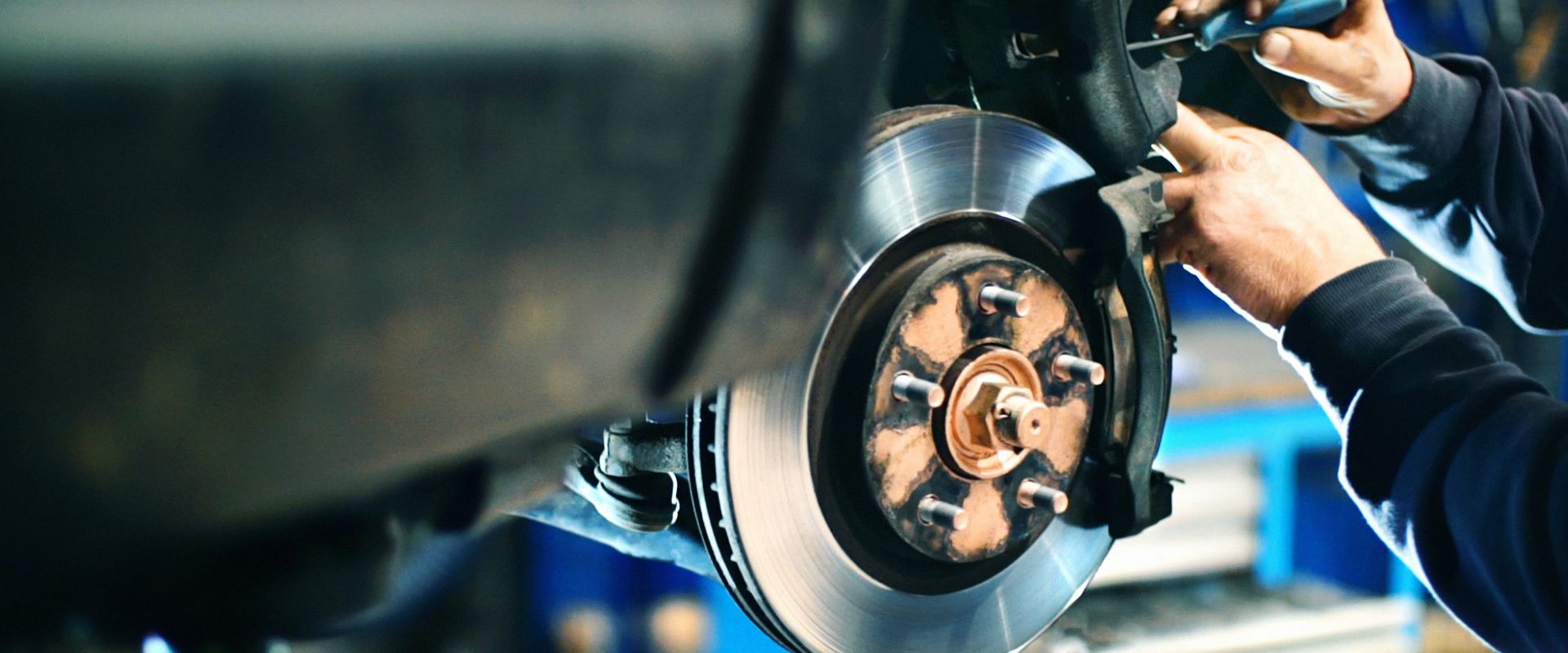
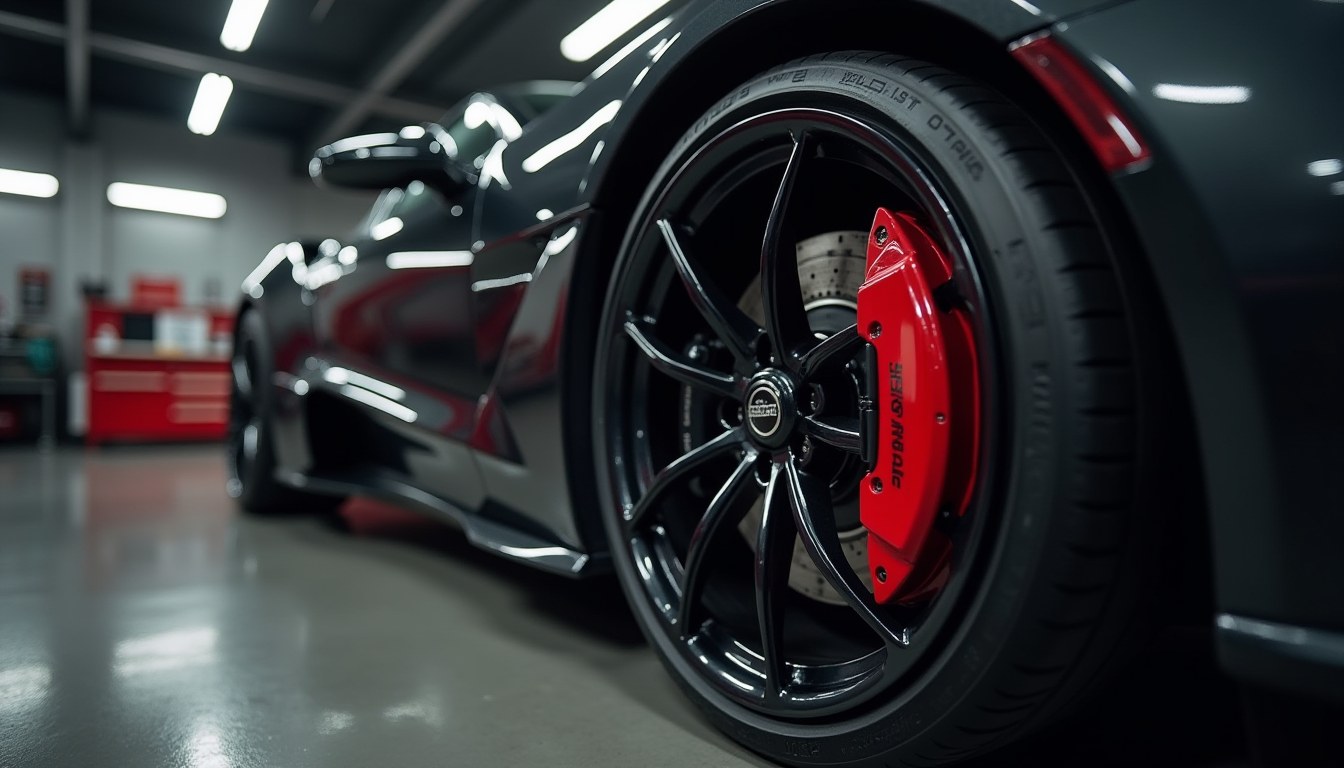
Brake Repair for European and Exotic Cars in Santa Clarita Valley
R2 Motorsports handles brake repair for the European and exotic vehicles that demand more than a general shop can deliver. From pad and rotor service on a daily-driven BMW to full ceramic brake disc replacement on a Porsche or Ferrari, our specialists use factory-grade diagnostic tooling, OEM-spec parts, and brake-specific procedures that match what the vehicle actually requires. Drivers in Valencia, Stevenson Ranch, Castaic, Saugus, Newhall, and Canyon Country bring their cars to us because brake work on a high-performance machine is not the place to cut corners.
Steel rotors, carbon ceramic composites, PCCB, CCM-R, big brake kits, ABS modules, wear sensors: we work across all of it. If your brake pedal feels soft, your car pulls under braking, or you’re hearing grinding on a car worth six figures, you need a shop that knows exactly what it’s looking at before it starts replacing parts.
Owners from Sylmar, Northridge, Simi Valley, and across the San Fernando Valley make the drive to R2 because specialist-level brake service for European and exotic cars this thorough is genuinely hard to find in the area.
Brake Repair for the Brands We Specialize In
Every brand on this list has brake system characteristics that require marque-specific knowledge. Here is what sets each apart and why it matters for brake service.
Porsche: Porsche Ceramic Composite Brake (PCCB) systems on 911, Cayman, Cayenne, and Panamera variants require dedicated ceramic pads, specific torque procedures, and inspection for disc stratification — a form of uneven wear unique to PCCB that can compromise braking without obvious visual cues. We handle PCCB inspection, bedding verification, and full disc replacement.
Mercedes-Benz: AMG models equipped with carbon ceramic brakes (AMG Ceramic High-Performance Compound Brakes) need the right pad compound and careful handling to avoid disc damage during service. We also handle the full range of AMG steel brake service, brake fluid specification (DOT 4 LV for newer AMG platforms), and wear sensor calibration.
BMW: M3 and M4 models, including the E46, E90, and current G80/G82, carry known ABS module vulnerability points alongside optional carbon ceramic brake packages. We diagnose ABS module failures accurately using factory-grade scan tools rather than misreading fault codes, and we handle the full pad and rotor service cycle on M-spec brake hardware.
Audi: RS-line Audis with optional ceramic brake packages, plus standard steel systems across the A and Q lineups. Audi brake fluid spec and electronic parking brake procedures require attention to OEM protocol during service. We follow Audi-specific bleeding and sensor reset procedures on every visit.
Ferrari: Ferrari Carbon Ceramic Matrix (CCM-R) discs on models from the 458 through the 296 and SF90 require Ferrari-specific pads and torque specs. CCM-R service done wrong causes disc cracking and pad incompatibility. We handle CCM-R inspection, pad replacement, and disc sourcing for Ferrari owners who want the job done correctly.
Lamborghini: Huracán and Aventador Carbon Ceramic Brake (CCB) systems carry real cost considerations: replacement discs can exceed $15,000 per axle on Aventador SVJ. We inspect CCB discs for cracks, check pad compound compatibility, and advise owners honestly on replacement timing so they are not surprised by the number.
McLaren: McLaren’s carbon ceramic disc service on 570S, GT, 720S, and Artura requires specific procedures for disc removal, hardware inspection, and pad bedding. We handle the full McLaren ceramic brake service cycle and keep pad compatibility at the front of every job.
Land Rover: Range Rover SVR and SVAutobiography models with carbon ceramic packages, plus the full lineup of steel brake systems across Defender, Discovery, and Sport variants. Land Rover electronic parking brake service and terrain response brake calibration are part of our standard repertoire.
Jaguar: F-Type R and SVR models with performance brake packages, plus standard steel brake service across the XE, XF, and F-Pace lineup. Jaguar-specific brake fluid spec and wear sensor programming are handled correctly on every job.
What’s Included in Our Brake Repair Service
We cover the full scope of brake system work, not just pad swaps. Here is what our brake repair service includes:
Brake pad replacement: OEM-spec or performance pad compounds matched to the vehicle’s brake system, installed with correct hardware, anti-squeal treatment, and sensor connections. Steel and ceramic systems handled equally.
Rotor service and resurfacing: Rotor thickness measurement, surface inspection, and resurfacing where within spec. Track-warped or heat-cracked rotors get replaced rather than turned to an unsafe minimum.
Brake fluid flush: DOT 4, DOT 4 LV (low-viscosity, required on most modern European platforms), and DOT 5.1 fluid service. Brake fluid is hygroscopic and degrades over time, lowering the boiling point and increasing the risk of vapor lock under hard use.
Caliper service and rebuild: Caliper inspection for piston seize, corrosion, and bleeder condition. Caliper rebuilds where appropriate, full replacements where the hardware is too far gone to save.
Ceramic brake inspection and replacement (PCCB / CCM-R / CCB / carbon ceramic): Disc inspection for stratification, cracking, and minimum thickness. Pad compound verification. Full ceramic disc replacement with OEM parts and correct torque procedures.
Big brake kit installation: Aftermarket big brake kit installation for track-focused builds, including bracket fitment, brake line routing, and alignment verification after installation.
ABS module diagnostics: Factory-grade scan tool reads of ABS module faults, wheel speed sensor testing, hydraulic unit evaluation, and module replacement where required.
Brake bleeding (manual and factory-grade pressure bleeding): Full system bleed after any hydraulic service, using the correct procedure for the platform, including electronic brake boost systems that require scan-tool-assisted bleeding.
Parking brake adjustment and electronic parking brake service: Mechanical rear drum-in-hat adjustment, cable inspection, and electronic parking brake actuator service with proper scan tool retraction.
Wear sensor replacement: OEM-spec wear sensor replacement per manufacturer position requirements. Sensor reset and calibration via factory-grade tools where required.
Specialty Tooling and Process
Brake service on European and exotic cars requires more than a floor jack and a torque wrench. Our shop uses factory-grade diagnostic equipment with full module access to read ABS fault memory, perform electronic parking brake retraction, bleed brake boost systems correctly, and reset wear sensor warnings after pad replacement. On cars with integrated stability control and brake bias modules, a scan tool is not optional — it is how the job gets done correctly.
For ceramic brake systems, we follow manufacturer disc handling procedures that prevent thermal shock during installation and verify pad compound compatibility before anything goes on the car. PCCB, CCM-R, and McLaren ceramic discs are brittle in ways that standard rotors are not. Drop one and you are looking at a replacement. We treat them accordingly.
Brake fluid service uses the correct specification for each platform. DOT 4 LV is not interchangeable with standard DOT 4 on AMG and other systems that specify low-viscosity fluid, and mixing them affects system response. We keep the right fluids on the shelf and use them correctly.
Common Brake Issues We Fix
Here are the brake problems we see most often on European and exotic cars at our shop.
Warped Rotors from Track Use
High-performance rotors on track-driven Porsche 911s, BMW M cars, and AMG models can develop hot spots and surface distortion after sustained high-temperature braking. The symptom is a pedal pulsation that gets worse as the brakes heat up. Resurfacing may help temporarily, but if the rotor has already been turned once, replacement is the right call.
Sticking Calipers
Caliper piston seize is common on cars that spend time near the coast or in environments with temperature swings. A stuck caliper piston causes uneven pad wear, heat buildup on that corner, and eventually a dragging sensation. We see this regularly on older BMW and Mercedes models. Early service prevents rotor damage and pad heat glazing.
ABS Module Failures on BMW M3 and M4
The E46 M3 and E90 M3 both have documented ABS module vulnerabilities. A failed ABS module triggers warning lights and disables stability control, and some failure modes mimic wheel speed sensor faults. Factory-grade diagnostics let us distinguish a module failure from a sensor issue before replacing parts that do not fix the problem.
Brake Fluid Hygroscopic Degradation
Brake fluid absorbs moisture from the atmosphere over time, which lowers its boiling point. On a car driven hard — even occasionally — degraded fluid can boil under sustained braking, creating vapor in the lines and a suddenly soft pedal. We see this on performance cars that have never had a fluid flush and on cars stored long-term. A fluid flush is one of the highest-value maintenance items we perform.
Ceramic Disc Cracking from Track Abuse
PCCB and CCM-R discs are designed for road and controlled track use. Extended lapping sessions without cool-down laps can thermally shock ceramic discs and cause radial cracking. We inspect ceramic discs on every brake service for any Porsche or Ferrari that sees track time, and we advise owners on cooling procedures that extend disc life.
Wear Sensor False Alarms
After pad replacement, some European cars require a scan-tool reset for the wear sensor warning to clear. Without it, the light stays on even with new pads installed. We perform all required sensor resets and calibrations as part of every brake service.
Why SCV Premium Owners Choose R2 for Brake Repair
Marque-experienced technicians who know your brake system: Our specialists work on Porsche, BMW, Mercedes, Ferrari, and Lamborghini brakes every week. They know PCCB stratification versus normal disc wear. They know which BMW ABS modules fail and how to confirm it. This is not a general shop that occasionally sees a European car.
Factory-grade diagnostic tooling for accurate reads: ABS faults, wear sensor resets, electronic parking brake retraction, and brake boost bleeding all require the right scan equipment. We have it. We use it on every applicable job.
Correct fluid specification on every service: We stock DOT 4, DOT 4 LV, and DOT 5.1 and use the correct spec for your car, not whatever is on the shelf.
Honest ceramic brake assessment: We will tell you whether your PCCB or CCM-R discs actually need replacement or can go another service interval. We do not recommend disc replacement to pad the invoice on a car with $15,000 rotors.
OEM-spec parts and hardware: We use original equipment or OEM-equivalent parts. We do not put generic rotors on a Porsche GT3 or substitute a cheap pad compound on a Ferrari ceramic system.
Transparent pricing before we start: We quote the full job before anything comes apart. If we find additional issues during service, we call you first.
Fast turnaround: Most brake jobs are completed same-day. Ceramic disc replacements and specialty hardware orders get a realistic timeline up front.
Service Areas
R2 Motorsports serves European and exotic car owners throughout the Santa Clarita Valley and surrounding communities. Our primary service area includes:
Castaic
Valencia
Saugus
Newhall
Canyon Country
Stevenson Ranch
We also regularly serve owners from Sylmar, Northridge, Simi Valley, Chatsworth, Granada Hills, and the broader San Fernando Valley and Los Angeles County. If your car is worth the trip, we are worth making it.
In addition to brake repair, R2 Motorsports provides wheel alignment, suspension repair, European auto repair, exotic auto repair, and factory-scheduled maintenance across the full lineup of European and exotic brands.
Frequently Asked Questions
How often should brake fluid be flushed on a European car?
Most manufacturers recommend every two years regardless of mileage, and sooner for track-driven vehicles. Brake fluid degrades with moisture absorption over time, and older fluid in a high-performance braking system is a safety issue, not just a maintenance item.
What is PCCB and why does it need specialist service?
Porsche Ceramic Composite Brake is Porsche’s carbon ceramic brake option available on 911, Cayenne Turbo, and Panamera. PCCB discs require ceramic-specific pad compounds, careful handling to prevent thermal shock, and inspection for disc stratification — a wear pattern that does not look the same as steel rotor wear but affects braking just as much. Using the wrong pad or skipping stratification inspection causes premature disc failure.
Can you service Ferrari CCM-R carbon ceramic brakes?
Yes. We handle Ferrari CCM-R disc inspection, pad replacement, and full disc service on 458, 488, F8, 296, and SF90 models. CCM-R service requires Ferrari-specific pad compounds and torque procedures. We source OEM-spec parts and follow the correct process on every job.
How do I know if my ABS module has failed or if it is just a sensor?
Factory-grade diagnostics let us read the full fault memory across the ABS and stability control modules, test individual wheel speed sensors, and check the hydraulic unit separately. On BMW E46 and E90 M3 models with known module vulnerability, we can confirm module failure versus a sensor issue before any parts are ordered.
Do you install big brake kits on exotic cars?
Yes. We install aftermarket big brake kits on track-focused European and exotic builds. Installation includes bracket fitment, brake line routing, and a post-installation alignment check where suspension geometry is affected. We advise on pad compound selection for the intended use before the kit goes on.
What is the difference between DOT 4 and DOT 4 LV brake fluid?
DOT 4 LV (low viscosity) is specified by Mercedes-AMG and other manufacturers that use electro-hydraulic brake systems sensitive to fluid viscosity at low temperatures. Using standard DOT 4 in a system that calls for LV fluid can affect modulation response. We use the correct spec for your specific car on every service.
How long does a brake service take at R2?
Standard pad and rotor service is typically same-day, often a few hours. ABS diagnostics and caliper rebuilds usually run a full business day. Ceramic disc replacements depend on parts availability, which we discuss honestly before the job starts.
Schedule Your Brake Service in Santa Clarita Valley
R2 Motorsports is the specialist choice for brake repair on European and exotic cars across SCV. Whether you need a straightforward pad and rotor swap on a daily-driven BMW or a full PCCB inspection on a track-prepped Porsche 911, we have the tooling, the parts knowledge, and the hands-on experience to do the job correctly. Do not take a car worth six figures to a shop that will guess at the brake system. Schedule your brake service online and we will get you in quickly.