

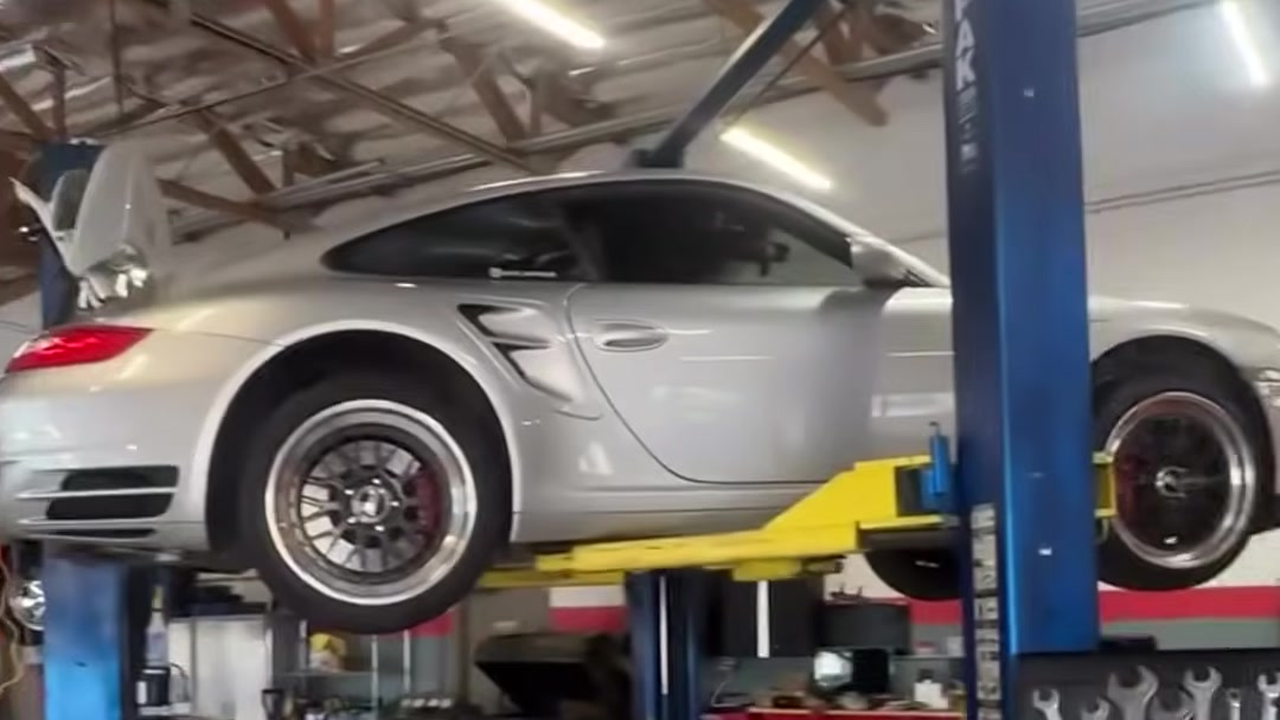
Paint Protection Film is a clear, self-healing film (PPF for short) applied over painted surfaces, and in Castaic it spends its life in serious sun. Wikipedia’s climate summary for Castaic puts average highs from June through September anywhere from the 90s F to above 100 °F (Source). Every owner of a filmed car in Castaic eventually asks the same thing: what does that heat do to the film over the years? Here are six answers, and what each means for your Porsche, Ferrari, Lamborghini, McLaren, AMG, or M car before you book an install, a repair, or a removal.
Key Takeaways
- Sun and heat break down cheap film and the adhesive layer first, and yellowing is the visible result.
- Film edges are the first place to inspect on a hot-climate car, and installation quality decides how they hold.
- Warranties cover specific failures (yellowing, cracking, blistering, delaminating) and exclude abuse and unrepaired body work.
- Removal is easiest on cured factory paint and riskiest on repainted panels, so sequence any bodywork first.
1. Sun Wears Down the Film and the Adhesive, Not Just the Surface
How much sun does your hood actually take? The National Weather Service calculates a UV Index forecast for most ZIP codes, and the EPA publishes it, so you can look up 91384 on any summer day. The EPA also explains that clouds absorb UV radiation and that clear skies allow virtually all of it to pass through (EPA, Learn About the UV Index). That page is written about skin exposure, not paint, so read it as context for how much sunlight reaches a parked car, not as a statement about film life.
UV and heat attack cheap film and the adhesive layer, and yellowing is how that shows up. UPPF USA, a film vendor, lists “UV exposure” and “oxidation” as causes of yellowing. It also says “budget or off-brand films may still yellow, especially in hot climates where UV exposure is intense” (UPPF USA). That’s vendor guidance, not independent testing. It does match how warranties are written.
XPEL’s Ultimate Plus and Stealth warranty lasts ten years from installation. It covers “yellowing, cracking, blistering, and delaminating” (XPEL warranty information). Those four words are your watch list for any filmed car that lives outdoors in the Santa Clarita Valley. Why does that matter? Slow yellowing is easy to miss on a white or silver car until a new panel, such as a replacement mirror cap, sits next to an old one.
Heat Damage Watch List
| What you see | Possible cause named by the sources | Warranty note |
|---|---|---|
| Yellow or amber tint | UV exposure, oxidation, budget film (UPPF USA) | Yellowing is on XPEL’s covered list |
| Cracking or blistering | Film failure | Both are on XPEL’s covered list |
| Lifting edge | Installation or heat stress | XPEL excludes improper installation and thermal abuse |
| Fine swirls or light marks | Normal wear | Often relax with heat (UPPF USA) |
2. Film Chemistry Decides How Well It Takes the Sun
The film’s base material matters more in heat than the name on the box. UPPF USA puts it this way: “Aromatic TPU is cheaper but prone to yellowing under UV light,” while “aliphatic TPU, on the other hand, is the gold standard” (UPPF USA). Treat that as one vendor’s framing. Then ask any installer which base material and top coat their film uses.
We install XPEL, SunTek, and Stek film at R2 Motorsports. Our paint protection film, ceramic coating, and detailing page explains that every film job starts with a paint condition evaluation. Paint correction comes first when swirls or oxidation are already there. Whichever film you choose, get the warranty in writing and keep the paperwork. XPEL’s terms apply to film “professionally installed in the manner recommended by the Company,” and they transfer to a new owner only with proof of the original installation date (XPEL warranty terms). If you may sell the car someday, that paperwork is part of its value.
3. Edges Are Where Heat Shows Up First
Check the edges first. Edge lift is when the perimeter of the film separates from the paint, and a film edge is the one place the adhesive meets open air, wash water, and dirt. A dark, sun-facing panel also runs hotter than the air around it. On hoods, front bumpers, mirror caps, and rocker panels, look for a visible gap, dirt tracking under the edge, or a corner that catches a fingernail. For example, a front-bumper edge that looked tight in spring can show a thin dark line after a hot summer, so compare it with a photo you took at pickup.
Edge quality starts at installation. XPEL’s exclusions list improper installation and “thermal abuse or shock (e.g. excessive heat or cold),” so a lifting edge can turn into an argument about cause (XPEL warranty information). Catch it early and the argument rarely starts.
Some platforms need extra thought at the edges. Our coatings page notes that factory film gaps are common on Ferrari deliveries, and that on the Lamborghini Huracan and Urus the factory coverage stops short on many high-impact zones. So the install plan should say what the factory covered and what the new film adds. The same page says McLaren Sport Series and Super Series carbon fiber panels call for a technique that accounts for the surface texture, and that matte finishes such as Audi Nardo Grey need matte-safe film. Porsche Paint to Sample colors get film matched to the color. Ask your installer how they’ll handle your car’s exact finish.
Questions to Ask Before You Book
- Which film line and base material will go on my car, and what does the written warranty say about yellowing?
- How are edges finished at panel seams, door jambs, and bumper openings?
- Is the pattern computer-cut for my exact model year?
- What happens to the film if a panel needs body or paint repair later?
- Did the factory already film part of the car, and which areas will the new film cover that it left bare?
- If the car has a matte finish, is the film you’re quoting made for matte paint?
4. Heat Powers Self-Healing, but Only for Light Marks
Self-healing is the film recovering from light swirls and scratches when it warms up, so the same heat that stresses the film also repairs it. UPPF USA says “minor scratches and swirls disappear with heat” (UPPF USA). Its lifespan guide limits the claim to “self-healing of light surface damage with heat” (UPPF lifespan guide). In a Castaic summer, a car parked outside may relax a fine wash mark by afternoon.
Don’t expect miracles, though. Self-healing is built for light surface marks, and a gouge from road debris is a different problem. If a deep mark sits on a hood or bumper, have it looked at in person rather than waiting for the sun to fix it.
5. Care Habits Decide How the Film Ages
How you park and wash counts as much as the film you picked. UPPF USA’s guide warns that “intense sun exposure can accelerate UV wear if not properly cared for.” Its advice is simple. Wash every two to three weeks with pH-neutral products, and store the car indoors or under a cover when possible (UPPF lifespan guide). A garage at home in Stevenson Ranch or Valencia helps more than any product.
Washing method matters for coverage too. XPEL excludes damage from harsh cleansers and solvents, and from “improper wash techniques, automatic car washes or incorrect wash tools” (XPEL warranty page). Have the film’s edges checked during your regular factory scheduled maintenance visit. A small lift is far easier to fix before a hot week makes it worse.
6. Removal Gets Harder with Age and Repaint, So Plan Bodywork First
Removal is low-risk on cured factory paint and riskier on repainted panels. TeckWrap, another film seller, states that “PPF does not pull off the clear coat on properly cured factory paint” (TeckWrap). Lifting, it says, “occurs only on repainted surfaces, poorly prepared panels, or when film is removed cold or after excessive adhesive aging.” The same article advises, “Do not let the adhesive age. If you see signs of wear, it’s time to remove it.”
Heat is part of the technique as well as the problem. Consider a hood that has baked in the sun for years: warming the adhesive slowly is what lets the film release without pulling at the paint. TeckWrap says it’s “important to use heat to release the adhesive.” UPPF USA cautions that too much heat can soften the lacquer beneath the film or make the adhesive sticky (UPPF USA). Both sources sell film. Use them as shop-level guidance, not lab results.
Sequence the Work Before Any Body or Paint Repair
If a filmed panel needs a repair or respray, decide the order first. XPEL’s warranty excludes “areas that have not been re-wrapped after a paint or body repair” (XPEL warranty information). TeckWrap says repainted surfaces should be “fully cured before PPF application” (TeckWrap). Put those two rules together and the sensible order is clear: film off, repair and cure, film back on. Agree on each step in writing before the car goes anywhere.
Frequently Asked Questions
How long does Paint Protection Film last in Castaic heat?
No independent source gives a Castaic-specific lifespan, so the firmest number is the written warranty. XPEL’s Ultimate Plus warranty runs ten years from installation and covers yellowing, cracking, blistering, and delaminating (XPEL warranty). Actual life depends on the film, the installation, and how the car is parked and washed.
Will PPF yellow in the Santa Clarita sun?
Cheap film is the main risk. One vendor says budget films may yellow in hot climates, while premium film “rarely yellows” (UPPF USA). Pick a known film line with a written yellowing warranty and you’ve covered most of that risk.
Can PPF come off a repainted panel safely?
It can, but the risk is higher. The vendor sources above tie clear coat lifting to repainted surfaces, poorly prepared panels, cold removal, or aged adhesive. Have a professional remove it with controlled heat, and don’t pull it yourself.
How often should I wash PPF in summer?
UPPF USA recommends every two to three weeks with pH-neutral products and soft microfiber drying (UPPF lifespan guide). Avoid automatic car washes, since XPEL’s warranty excludes damage from them.
What film coverage options does R2 Motorsports offer?
According to our coatings and detailing page, we install XPEL, SunTek, and Stek film in three configurations: full-body, a track package (hood, bumper, mirrors, and rocker panels), and partial-front (hood, bumper, and headlights). Panels are computer-cut for each vehicle. Which one fits depends on how and where you drive.
The Bottom Line on PPF in Castaic Heat
Inland heat doesn’t ruin good film, but it rewards good installation, honest warranty reading, and a plan before any bodywork. Whether you drive in Valencia, Saugus, Newhall, Canyon Country, Stevenson Ranch, or Castaic, check your edges, watch for yellowing, and keep your paperwork. For broader care of your car, see our exotic auto repair and European auto repair services.
If your film shows lifting edges or yellowing, or you’re facing bodywork on a filmed panel, contact R2 Motorsports at 661-251-3278 and we’ll look at it with you.